 deutsch
  deutsch (CH)
  deutsch (AT)
  russisch
  englisch
  rumänisch
  italienisch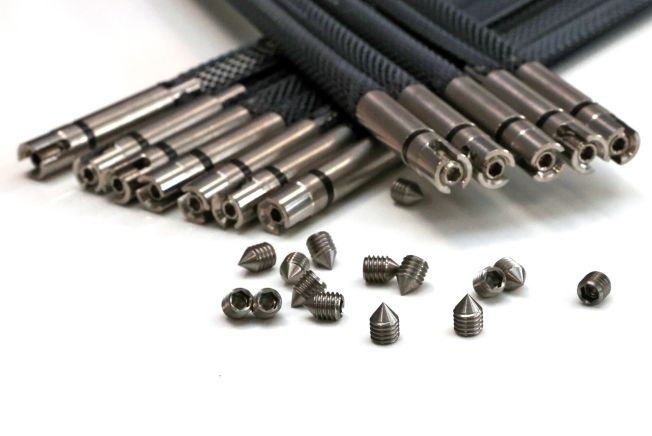
Drymat anode systems
In the latest version of standard 3355 from 03/2017, which applies to our drying process, anodes that meet the material requirements from cathodic corrosion protection are required.
The highest quality in terms of anode durability is required in bridge construction. For this, exclusively titanium with corresponding activation coatings made of precious metal is used.
For anodes, cathodes, all screw connections and cables, we therefore use titanium with an activation coating consisting of iridium or platinum.
According to the literature by Lida, the anode's life expectancy at a current density of 110 mA/sqm is greater than 100 years. According to standard 3355, the current density in our application is limited to 5 - 8 mA / m, so the service life is correspondingly high.
By using a built-in resistor, an optimal current output can be ensured. This resistor prevents larger differences in current output and enables a higher average current density than with large anodes without a series resistor.
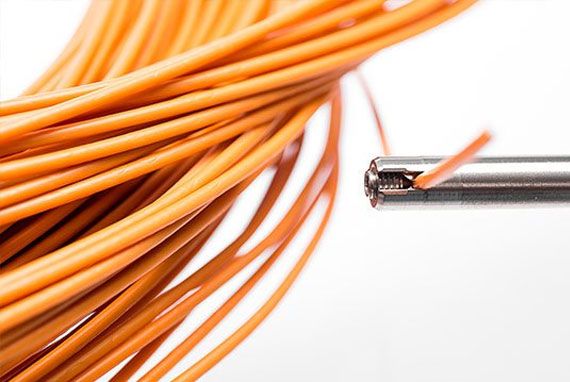
Several anodes can be connected to a single supply wire, which greatly reduces installation work. A titanium screw penetrates the insulation and thus establishes the connection simply and securely. The wire therefore does not need to be stripped but merely placed into the anode head. The screw connection is made precisely at exactly 1.2 Nm using a torque tool. Through the use of the micromesh, the electrical conductance between the primary anode and the certified mortar is greatly improved.
By using identical materials for cables, screw contacts, anodes and cathodes, stress corrosion, the formation of copper sulphate and a resulting failure of the system are de facto ruled out.
Receive a non-binding damage analysis
Start your free moisture check
An expert appointment in just 60 seconds
About Drymat
Drymat is one of the leading companies in the field of masonry drying. With more than 25 years of experience, our customers rely on Drymat's expertise.
Contact
-
- Address
- Dresdner Straße 24, 09577 Niederwiesa
- Phone
- info@drymat.de
-
- Opening hours
- Mon-Fri: 08:00 - 15:00